
Understand the exposure
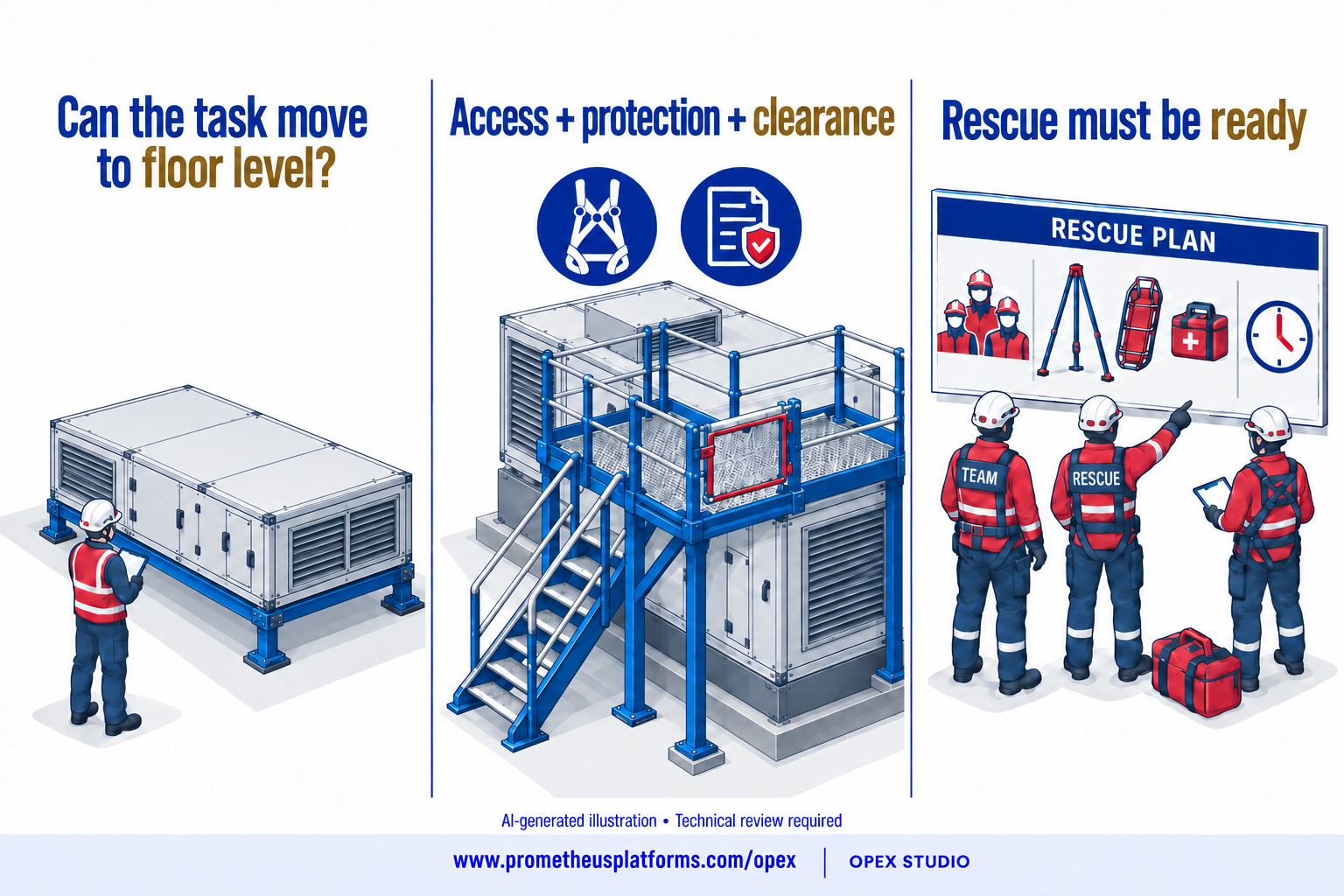
Assess the task, access and egress, supporting structure, openings, edges, falling objects and people below. Include changing loads, weather where relevant and adjacent work. Reaching a work position is only part of the system; getting the person and equipment safely to and from it also matters.
Design and establish protection
Consider floor-level assembly, relocated equipment or other design changes that remove a particular elevated task. Where elevation remains, assess engineered access and collective protection before relying heavily on personal response. Any selected system needs competent acceptance, compatibility, inspection and emergency arrangements appropriate to the actual task.
Verify before and during work
The control owner translates these teaching prompts into asset-specific performance requirements and a safe checking method. Record the actual evidence, its scope and the responsible role. Missing evidence remains Unknown; a required control that fails or cannot be verified creates a STOP condition for dependent exposure.
- The selected method addresses access, work position and people below.
- Required structures, equipment and protective functions have accepted evidence.
- Rescue and communication capability are available for this work and shift.
Practise a decision
A team has a harness and plans to reach a component from an elevated position. What would demonstrate that the job is ready?
Feedback: The presence of a harness does not complete the plan. The competent owner must establish the accepted work/access system, its limitations, required protection, inspection evidence and rescue capability. The team also needs to understand changes that require work to stop.
Changed condition: The work position is protected, but the area below is now used for deliveries. Reassess the falling-object and traffic interface. Keep the affected exposure restricted until coordinated controls and communication are verified.
Support the people doing the work
Pressure to complete a short task can encourage shortcuts. Ask the crew to explain why the chosen arrangement is appropriate and what would invalidate it. Treat missing rescue capability as a readiness gap, not a detail to solve after an incident.
Transfer the learning
Choose one relevant task and explain the hazard, protective function, evidence needed and condition that would stop the work. Then identify who can resolve a gap and what must be rebriefed before designated restart. Use an approved classroom or tabletop example; do not create a hazardous condition for assessment.
This topic is educational guidance, not an approved equipment procedure or a competence certificate. C8-03 is the stable program identifier. Local technical acceptance, emergency capability and understood instructions remain prerequisites for actual work.
Learning material for team discussion. Apply your site’s approved procedures, competent-person assessments and applicable requirements to actual work.
Take this learning to the team
Choose the language and format for your session. Review drafts with your safety and operations leads before adapting them to local work. A download is learning material, not authorization to perform a hazardous task.
English resources
- Learner practice workbook (DOCX, 11 KB) ↓Teaching and local review edition · v1.0
- Critical 8 one-page recaps (PDF, 732 KB) ↓Design and review draft · v0.13
- Critical 8 teaching slides (PPTX, 3.9 MB) ↓Design and review draft · v0.13
Sources & further reading
Use the original source to check its scope, terminology and current requirements.