OPEXSTUDIO
← All examples
Manufacturing / 6S / worked example

Keep the assembly line ready for the next frame

Give the next frame the right parts, space and clear next step.

Take the full example with youPhotos. People. A practical plan.

Project timeline, actions for every S and checks before completion.

Open sample PDF Free to read. No sign-in needed.
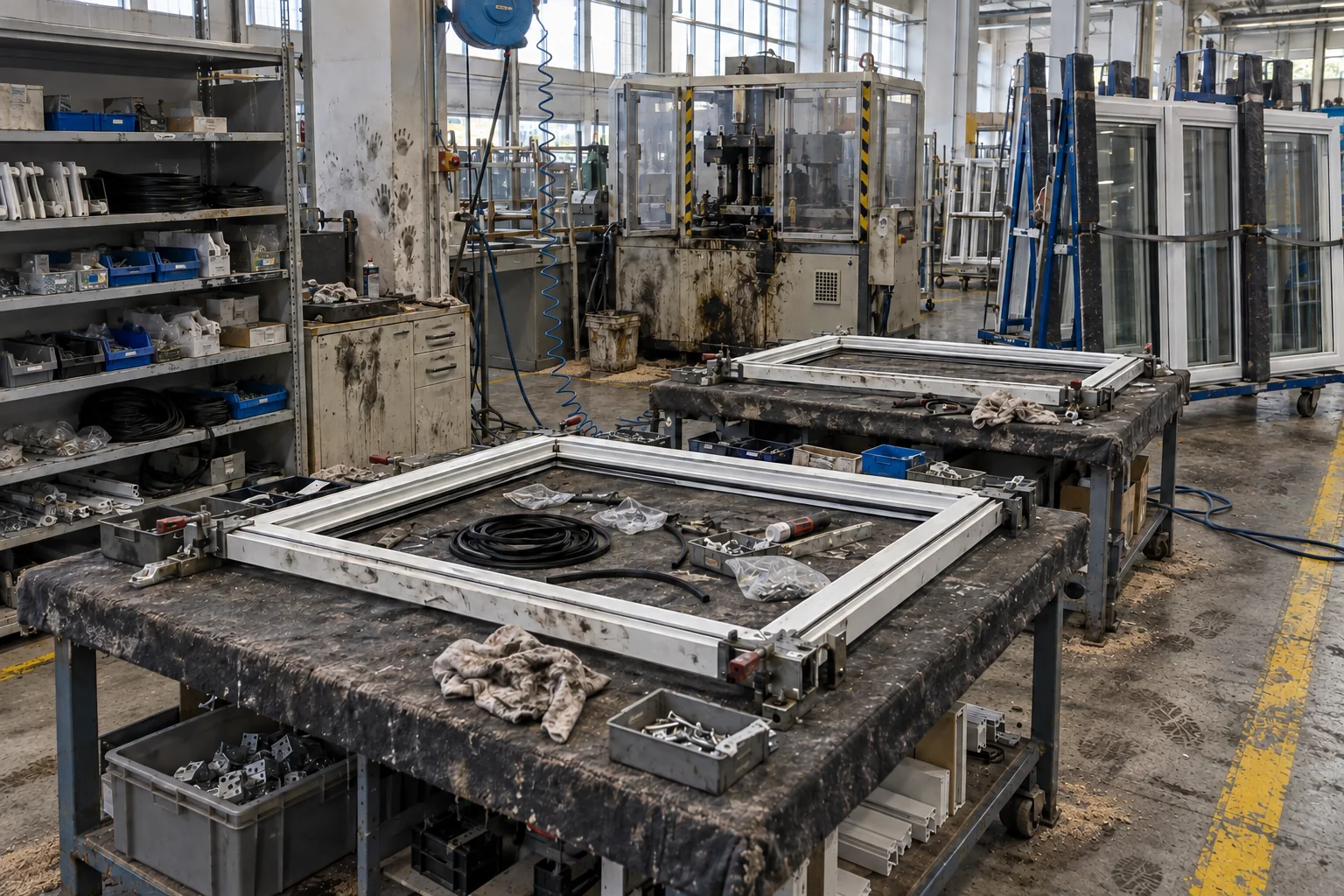
Generated illustration: Keep the assembly line ready for the next frame, starting condition
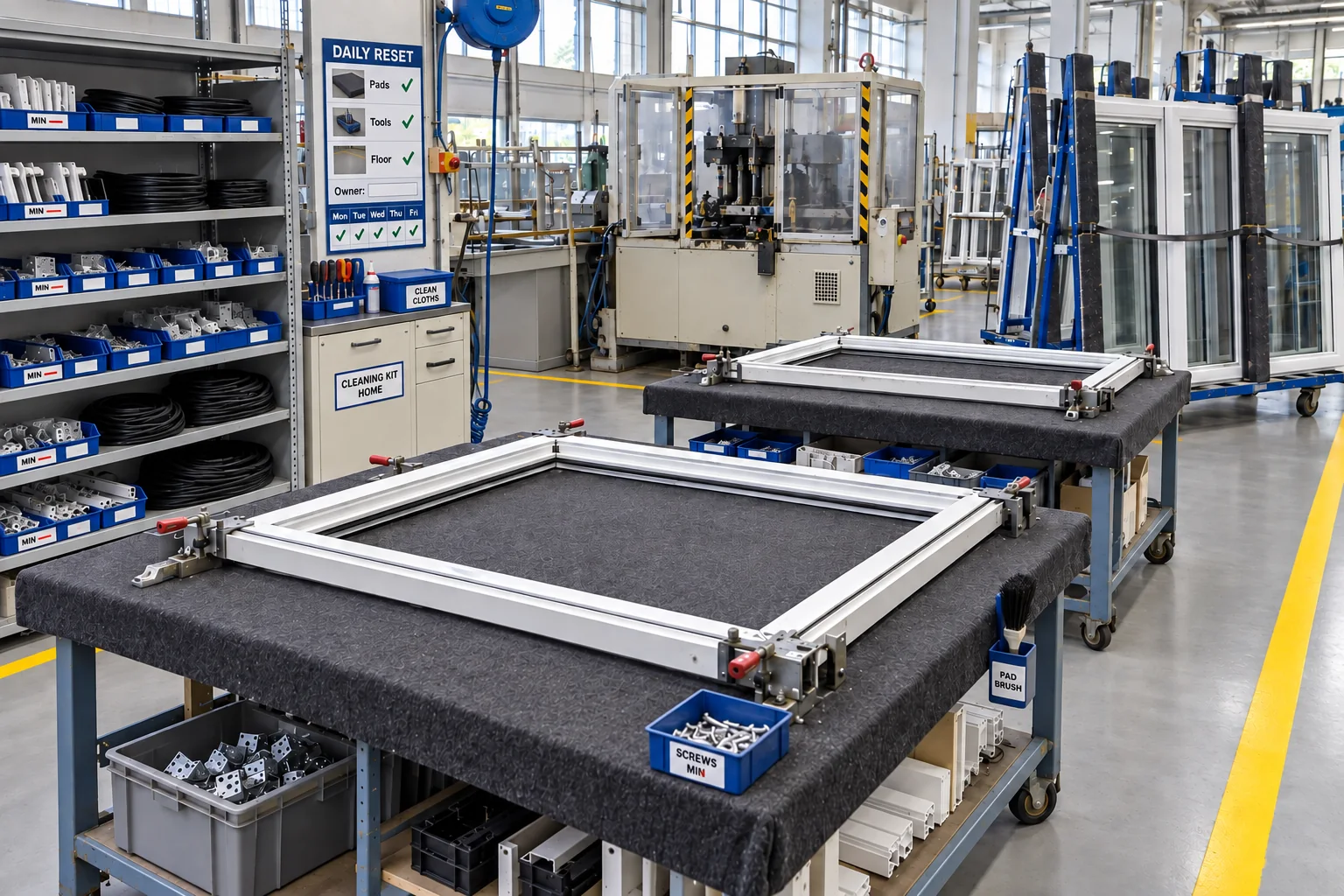
Generated concept: a possible improved arrangement for Keep the assembly line ready for the next frame
Starting pointProposed concept
Generated illustrations. The concept shows a possibility, not a completed improvement or verified safety result.

A-grade is the proposed target. A begins at 90% in the existing OPEX rubric. This target uses the same observed criteria and coverage as the sample baseline. It is proposed, not earned from the generated concept; Sustain and other unknowns remain unscored.

Learn it, then try it

Understand the method
behind this example.

Two illustrated lessons with practical steps, a question to try and feedback. Read online or follow the teaching pages in the full report.

A clear starting point

Make the problem
small enough to work on.

Greasy bench edges, mixed components and unclear return positions make the next frame harder to prepare. Start with one station and protect component identification throughout the trial.

Frame assembly preparation, visible component storage and the local walking route. Product tolerances, glazing methods, clamping and pneumatic controls remain outside this organization trial.

Sample baseline43.8%Sample condition score
Proposed goal91.3%A-grade target

Illustrative starting figures. The goal has not been achieved.

Manufacturing / 6SOPEX field notes

Keep the assembly line ready for the next frame

Give the next frame the right parts, space and clear next step.

Sample starting point43.8%Sample condition score
Goal to work towards91.3%A-grade target
01

See the starting point

02

Picture a better arrangement

03

Test one area

04

Check and repeat

See the starting pointPicture a better arrangementTest one areaCheck and repeat

A worked example to learn from. Sample figures and people; targets are not achieved results.

People, timing and a clear finish

A plan the team can follow.

Read the full report ↗

Project completion timeline

Planned finish · Day 30
  1. Agree the station resetAva · Assembly lead

    Day 1–7 · Confirm component identity, reject decisions and the trial boundary.

  2. Test clearer suppliesOmar · Process lead

    Day 8–14 · Tessa records the residue-source investigation, authorized correction and real recurrence check; verify the storage arrangement too.

  3. Practice every shiftMaya · Shift trainer

    Day 15–21 · Both shifts demonstrate the reset and escalation for look-alike components.

  4. Check the next framesFinn · Quality lead

    Day 22–30 · Repeat twenty comparable preparations without worsening component selection.

Proposed timing and fictional owners. Close each action after its check is met; a date alone does not prove completion.

Actions for each S

Planned finish · Day 30
  1. SortSeparate frame-kit contentsAva · Assembly lead

    Identify needed hardware, seals, offcuts and damaged components with the assembly lead before clearing the station.

    Day 1–7 · Every retained kit has the correct identity and quantity; uncertain components have a disposition owner.

  2. Set in orderSet up a clear frame kitOmar · Process lead

    Trial dedicated hardware bins and supported component positions around the same padded assembly tables.

    Day 8–10 · The next frame kit is ready without searching or moving unsupported glazing or frames.

  3. ShineProtect clean assembly surfacesTessa · Maintenance lead

    Maintenance investigates recurring contamination; the assembly team restores approved pads and surfaces and checks subsequent frames.

    Day 8–14 · The source and response are recorded; clean pads do not conceal a continuing contamination problem.

  4. StandardizeAgree the frame-ready checkMaya · Shift trainer

    Write the accepted kit, pad-condition and station-reset checks with the assembly and quality leads.

    Day 15–17 · Two shifts identify the same ready condition and response for a damaged pad or missing component.

  5. SustainReview the next frame runsFinn · Quality lead

    Track kit-ready time, missed resets and quality observations across comparable frame work through day 30.

    Day 18–30 · Faster preparation is accepted only with the agreed quality and workload checks.

  6. SafetyCheck handling and restraintsAva · Assembly lead

    The competent assembly lead reviews frame/glazing handling, support, restraints and equipment access before changed positions are used.

    Day 1–30 · Approved handling and support controls remain in place; unresolved concerns retain an owner.

Proposed timing and fictional owners. Close each action after its check is met; a date alone does not prove completion.

Bring the idea back to your work

Start the conversation with your team.

Use the report to choose one area, name the next action and agree how you will check it. Try a photo from your own workplace, then turn the possibility into a practical plan.

Keep exploring

Another useful starting point.

See every example →