
Understand the exposure
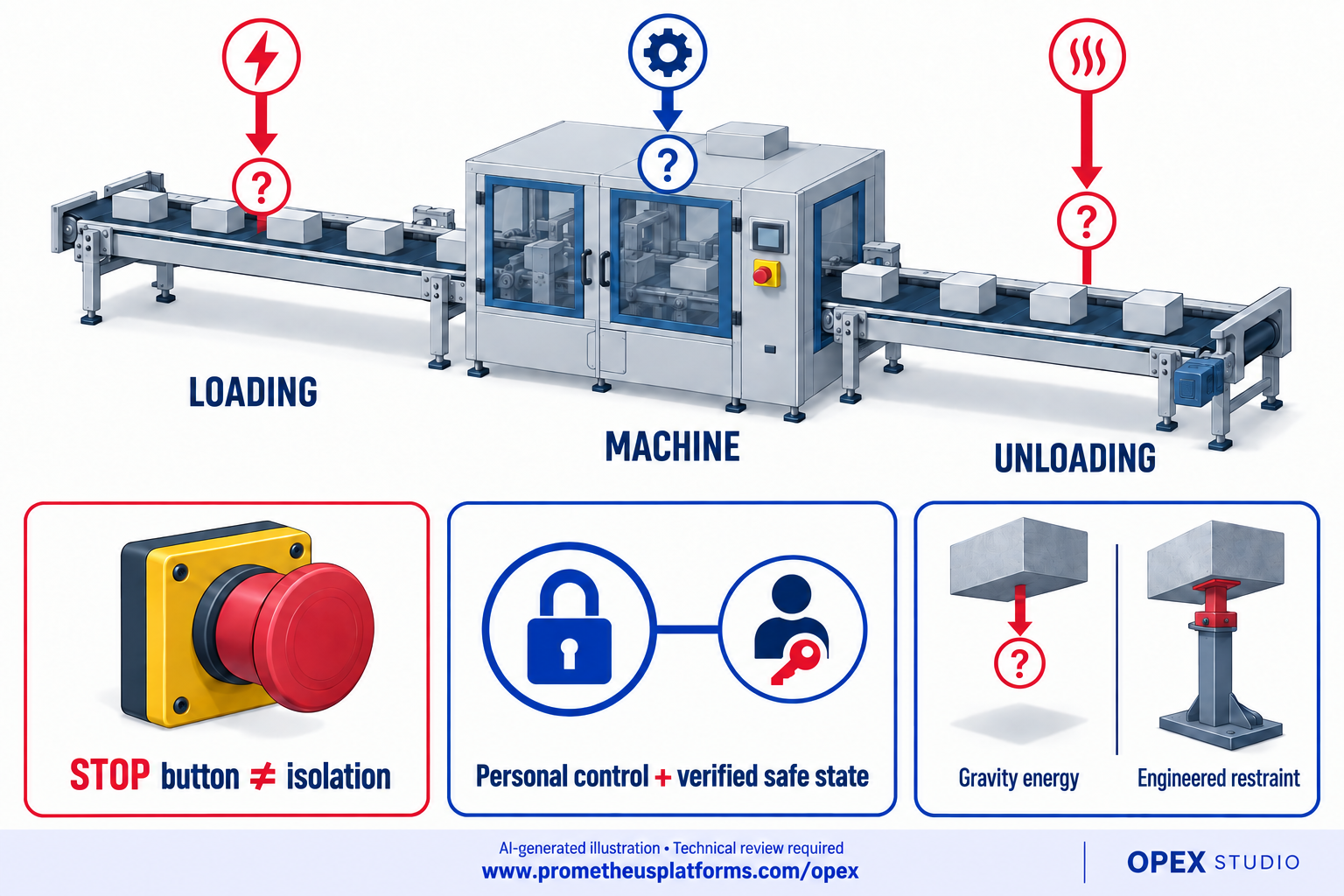
Identify the actual asset, connected loading and unloading equipment, utilities, stored energy and possible movement. Include gravity, pressure and energy that can return or accumulate. An emergency stop, software command or guard interlock has a different function from the required isolation. Their presence does not establish a safe state for access or servicing.
Design and establish protection
Use the approved asset-specific method with competent authorized people. The method must define the protection of affected individuals, system boundaries, stored-energy response, verification and continuity during group work or shift changes. This lesson does not supply an isolation sequence or authorize someone to operate an unfamiliar device.
Verify before and during work
The control owner translates these teaching prompts into asset-specific performance requirements and a safe checking method. Record the actual evidence, its scope and the responsible role. Missing evidence remains Unknown; a required control that fails or cannot be verified creates a STOP condition for dependent exposure.
- Current method covers the actual asset and all connected energy.
- Required personal or group protection is established and maintained.
- Verification and handover evidence meet the approved method.
Practise a decision
A press has stopped mid-cycle. A worker proposes reaching inside because the emergency stop is pressed. What remains unknown?
Feedback: The stop command does not prove control of every energy source or stored movement. Prevent access and obtain the authorized isolation response for that asset. Establish the complete boundary and accepted safe-state evidence before dependent work.
Changed condition: The supply is locked, but a raised fixture can descend. Maintain the restriction while the competent owner resolves the gravity hazard through the approved method. One isolated energy source does not prove the whole system is protected.
Support the people doing the work
Familiarity can hide an added supply or a changed fixture. The pre-job brief should test understanding of boundaries and critical steps. After interruption, recover the verified work state; do not infer it from a colleague’s informal assurance.
Transfer the learning
Choose one relevant task and explain the hazard, protective function, evidence needed and condition that would stop the work. Then identify who can resolve a gap and what must be rebriefed before designated restart. Use an approved classroom or tabletop example; do not create a hazardous condition for assessment.
This topic is educational guidance, not an approved equipment procedure or a competence certificate. C8-02 is the stable program identifier. Local technical acceptance, emergency capability and understood instructions remain prerequisites for actual work.
Learning material for team discussion. Apply your site’s approved procedures, competent-person assessments and applicable requirements to actual work.
Take this learning to the team
Choose the language and format for your session. Review drafts with your safety and operations leads before adapting them to local work. A download is learning material, not authorization to perform a hazardous task.
English resources
- Learner practice workbook (DOCX, 11 KB) ↓Teaching and local review edition · v1.0
- Critical 8 one-page recaps (PDF, 732 KB) ↓Design and review draft · v0.13
- Critical 8 teaching slides (PPTX, 3.9 MB) ↓Design and review draft · v0.13
Sources & further reading
Use the original source to check its scope, terminology and current requirements.